Invited Speakers 2026

Dr. Peter Fineran
University of Otago, New Zealand
Peter Fineran is a Professor at the University of Otago, New Zealand and leads the Phage- host interactions (Phi) laboratory. He obtained a BSc (Hons) in Biochemistry from the University of Canterbury, NZ, then completed his PhD and post-doctoral training at the University of Cambridge, UK. Peter’s group researches the interactions between bacteriophages, other mobile elements and their bacterial hosts – in particular in the area of CRISPR-Cas and other phage defence systems. His team has also worked extensively on strategies used by phages to evade phage defence systems as well as the development of phages in therapeutic applications. Peter has published over 140 articles, has filed multiple patents and received numerous awards in recognition of his research, including the Fleming Prize from the Microbiology Society, UK. He is a Fellow of the Royal Society of New Zealand.

Dr. Ekaterina Semenova
Rutgers University, USA
Ekaterina Semenova, PhD, is Laboratory Director and Assistant Research
Professor at the Waksman Institute of Microbiology, Rutgers University (USA). She earned her B.Sc. in molecular biology from Novosibirsk State University (Russia) and began her scientific career studying the genetic diversity of microorganisms from Lake Baikal. In 2003, following completion of her PhD, Dr. Semenova joined the laboratory of Konstantin Severinov at Rutgers, where she progressively assumed scientific leadership and established a research program focused on bacteriophage–host interactions and bacterial defense mechanisms, particularly CRISPR-Cas adaptive immunity. Her work has led to several
important discoveries in the CRISPR field, including the seed sequence requirement for target recognition, the mechanism of primed spacer acquisition, the structure of CRISPR adaptation intermediates, and the recent discovery of an antiphage defense mechanism mediated by Cas13-dependent tRNA cleavage. Her research continues to advance understanding of RNA-targeting CRISPR systems and their applications.

Dr. Gaetan Burgio
The Australian National University, ACT
A/Prof Gaetan Burgio, MD, PhD is leading a research laboratory at the John Curtin School of Medical Research, the Australian National University, Australia. Gaetan completed a medical degree at Paris and then completed a PhD in mammalian genetics at the Pasteur Institute (Paris) and the National Museum of Natural History (Paris). He migrated to Australia in 2008 Joined Prof Simon Foote’s laboratory as a postdoctoral fellow . In 2015 Gaetan established his independent research and his laboratory at the Australian National University at Canberra, Australia. Gaetan’s research aims to gain a fundamental understanding in the interaction between a pathogen and its host. He has a strong interest on prokaryotic immune defences with a specific emphasis on single strand positive RNA viruses and the development of RNA and CRISPR technologies for gene therapy of molecular detection. His research program uses a combination of computational biology, microbiology, biochemistry and RNA biology to dissect these mechanisms and develop technologies.

Dr. Lu Wang
QIMR Berghofer, QLD
Dr. Lu Wang is an early-career breast cancer genomic scientist in QIMR. She focuses on understanding how the noncoding genome modulates breast cancer development, with the ultimate goal of identifying novel therapeutic targets. She completed her Ph.D. at QIMR with Queensland University of Technology in 2023. She was awarded ACRF Prize for Cancer Research Excellence 2025. Dr. Wang has expertise in non-coding RNA biology, developing 2D/3D CRISPR–Cas13 systems and CROP-seq platforms to uncover regulatory networks driving breast cancer progression.

Dr. Wei Deng
University of Technology Sydney, NSW
A/Prof Wei Deng is Head of the Nanomedicine group in the School of Biomedical Engineering at UTS. Her multidisciplinary research integrates nanobiotechnology, oncology, biomedical science and pharmaceutical manufacturing to develop innovative technologies for the treatment of cancer and genetic disorders. Wei received her PhD in nanobiotechnology from Macquarie University. She began her academic career in nanocarrier delivery research as a DECRA Fellow at Macquarie University, later establishing her own laboratory at UNSW before joining UTS, where she leads the Nanomedicine Group. Wei has published numerous high-impact papers across materials science, pharmaceutics, biochemistry and biomedical engineering, and holds multiple patents in the field of gene/drug delivery, several of which have been licensed to industry. Her flagship innovation focuses on developing safe, affordable and effective gene delivery platforms to accelerate the clinical translation of gene therapies, including CRISPR.

Dr. Daniel Layton
CSIRO, VIC
Dr Daniel Layton is a Senior Research Scientist in CSIRO Health and Biosecurity, working at the interface of host-pathogen biology and translational countermeasure development. His research applies genome-wide CRISPR screening approaches (including GeCKO-style libraries) and engineered knockout cell lines to identify host factors that shape infection outcomes and immune signalling. Daniel combines these functional genomics tools with infectious disease models and immunology to map pathways that drive viral replication, pathology, and protective responses, with a track record spanning influenza and other emerging threats.

Dr. Christopher Gyngell
University of Melbourne, VIC
Christopher Gyngell is an Associate Professor in the Department of Paediatrics at the University of Melbourne and Team Leader of the Biomedical Ethics Research Group at the Murdoch Children's Research Institute. His research focuses on the ethical, legal, and social implications of emerging genetic technologies, with a particular focus on genome editing and genomic data. He has published widely on the ethics of gene editing in journals including Nature, Bioethics, and the Journal of Medical Ethics.
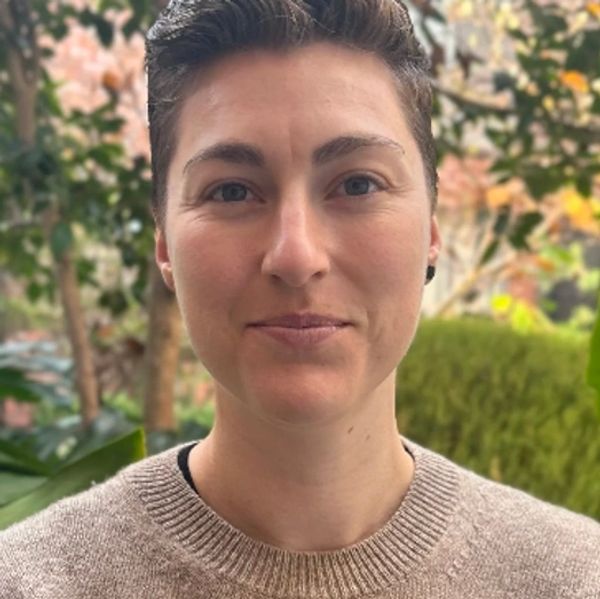
Dr. Brooke Hayes
Monash BDI, VIC
Brooke Hayes is a protein biochemist and structural biologist at Monash University. Her research focuses on bacterial defence and persistence in polymicrobial environments, with the aim of understanding how diverse molecular factors influence bacterial survival. Following an MSc at the University of Otago, Brooke completed her PhD at the Monash University Biomedicine Discovery Institute in 2023, where she investigated the structure and function of protein toxins associated with the type VI secretion system. Currently, Brooke is a postdoctoral research fellow studying the CRISPR-Cas13 nuclease family, examining Cas13 substrate specificity, cleavage mechanisms, and the role of accessory proteins in modulating activity. In recognition of her early-career research, Brooke was a recipient of the 2025 Lorne Proteins Anders Early Career Researcher Award.

Dr. Marjan Hadian-Jazi
Monash BDI, VIC
Marjan is a research fellow in the Monash Biomedicine Discovery Institute with a background in computer science and expertise in machine learning techniques. She leverages her programming skills to advance data analysis and artificial intelligence, contributing to the development of cutting-edge solutions in structural biology. Additionally, she is focused on creating novel methods for designing proteins using advanced AI methodologies.

Dr Lisanne Spenkelink
University of Wollongong
Lisanne obtained her BSc and MSc in physics in the Netherlands. For her PhD, she joined the lab of Antoine van Oijen at the University of Groningen to study bacterial DNA replication at the single-molecule level. She moved with the van Oijen lab to the University of Wollongong and obtained a joint PhD degree from the Universities of Groningen and Wollongong in 2018. Lisanne worked as an Associate Research Fellow at the University of Wollongong on developing new single-molecule techniques to study the more complex eukaryotic DNA replication system. In 2022, she was awarded an NHMRC Investigator grant. She aims to use her expertise in the development of single-molecule visualisation methods study complex biomolecular mechanisms.

Dr Dáire Gannon
WEHI